Cremations vs. Traditional Burial Which Option Is Right for You?

When planning end-of-life arrangements, one of the most important decisions families face is choosing between cremation and traditional burial. Each option offers its own benefits, considerations, and emotional significance. Understanding the differences can help you make the choice that best reflects your values, beliefs, and budget.
What Is Cremation?
Cremations have become an increasingly popular option for families seeking flexibility and simplicity. The cremation process involves respectfully reducing the body to ashes through high heat, with the remains returned to the family afterward.
One of the primary advantages of cremations is affordability. In many cases, cremations cost significantly less than traditional burials because they eliminate expenses such as caskets, burial plots, and embalming. This makes cremation an appealing option for families seeking meaningful yet cost-effective arrangements.
Cremations also offer flexibility for memorial services. Families can choose to hold a service before or after the cremation, or even plan a celebration of life at a later date. Additionally, ashes can be kept in an urn, scattered in a meaningful location, or incorporated into memorial items, allowing for a personalized tribute.
Understanding Traditional Burial
Traditional burial is a long-standing practice that involves placing the body in a casket and interring it in a cemetery. For many families, this option provides a sense of tradition, structure, and permanence.
One of the key benefits of burial is the availability of a dedicated physical location for remembrance. A gravesite can offer comfort to loved ones who wish to visit regularly and maintain a tangible connection. Burial services also often follow established religious or cultural customs, which can be an important factor for many families.
However, traditional burial typically costs more. Expenses can include the casket, burial plot, headstone, embalming, and service fees. Additionally, the burial timeline is often more immediate, leaving less time for the extended family to gather and plan.
Key Factors to Consider
When deciding between cremations and burial, there are several important factors to keep in mind:
1. Cost
Cremations are generally more budget-friendly, while burials tend to be more expensive due to additional services and materials.
2. Flexibility
Cremation allows for greater flexibility in scheduling and memorialization. Burial services usually follow a more structured timeline.
3. Personal Beliefs
Religious, cultural, or personal beliefs may strongly influence your decision. Some traditions prefer burial, while others fully support cremation.
4. Environmental Impact
Many people consider cremations a more environmentally conscious option, although eco-friendly burial options are also becoming available.
5. Memorial Preferences
If having a physical place to visit is important, a burial may feel more meaningful. If you prefer versatility in how you honor your loved one, cremations offer more options.
Making the Right Choice for Your Family
There is no universally “right” choice between cremations and traditional burial—only what feels right for you and your family. Taking the time to discuss preferences, values, and financial considerations can help ensure that your decision aligns with your wishes.
It can also be helpful to work with a compassionate funeral provider who can guide you through your options. Professional support ensures that every detail is handled with care, allowing you to focus on honoring your loved one.
Final Thoughts
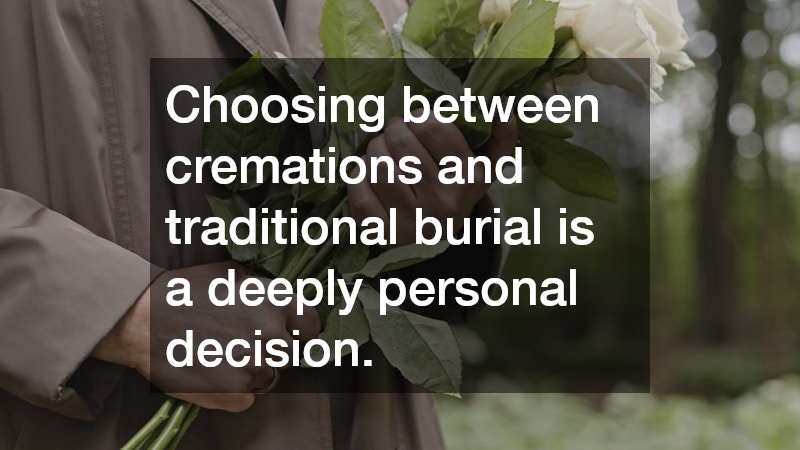
Choosing between cremations and traditional burial is a deeply personal decision. Both options provide meaningful ways to say goodbye and celebrate a life well lived. By understanding the differences and considering your unique needs, you can make a choice that brings comfort and peace during a difficult time.
If you’re exploring cremations or burial services, reaching out to a trusted provider can help you navigate the process with confidence and clarity.